A furry character can wear the same jacket as a human character, and the jacket will still be wrong. The sleeves end where the paws begin, the collar fights the ears, and the back sits flat over a tail that has nowhere to go. The problem is not the style. It is the body underneath it. A non-human body has parts a human pattern never accounts for, and every one needs a decision before the first image is generated.
The first article explained how to design a furry character that feels like a person. The second explained species, the third faces and expressions, the fourth body details, the fifth the life behind the design. This one is the layer on top of all five: the clothes. A character with a backstory still needs something to wear, and the outfit has to fit the animal, not just the pose.
Rask dom
Design the outfit around the three things that break every human pattern: den hale, den ører, and the paws. A jacket needs a tail opening placed where the tail actually leaves the body, not where a human back seam happens to fall. A hat needs room for the ears, not a hole punched through afterward. Shoes need to fit paws, not feet. Get those three right and the rest of the outfit is taste; get them wrong and no amount of style saves the image.
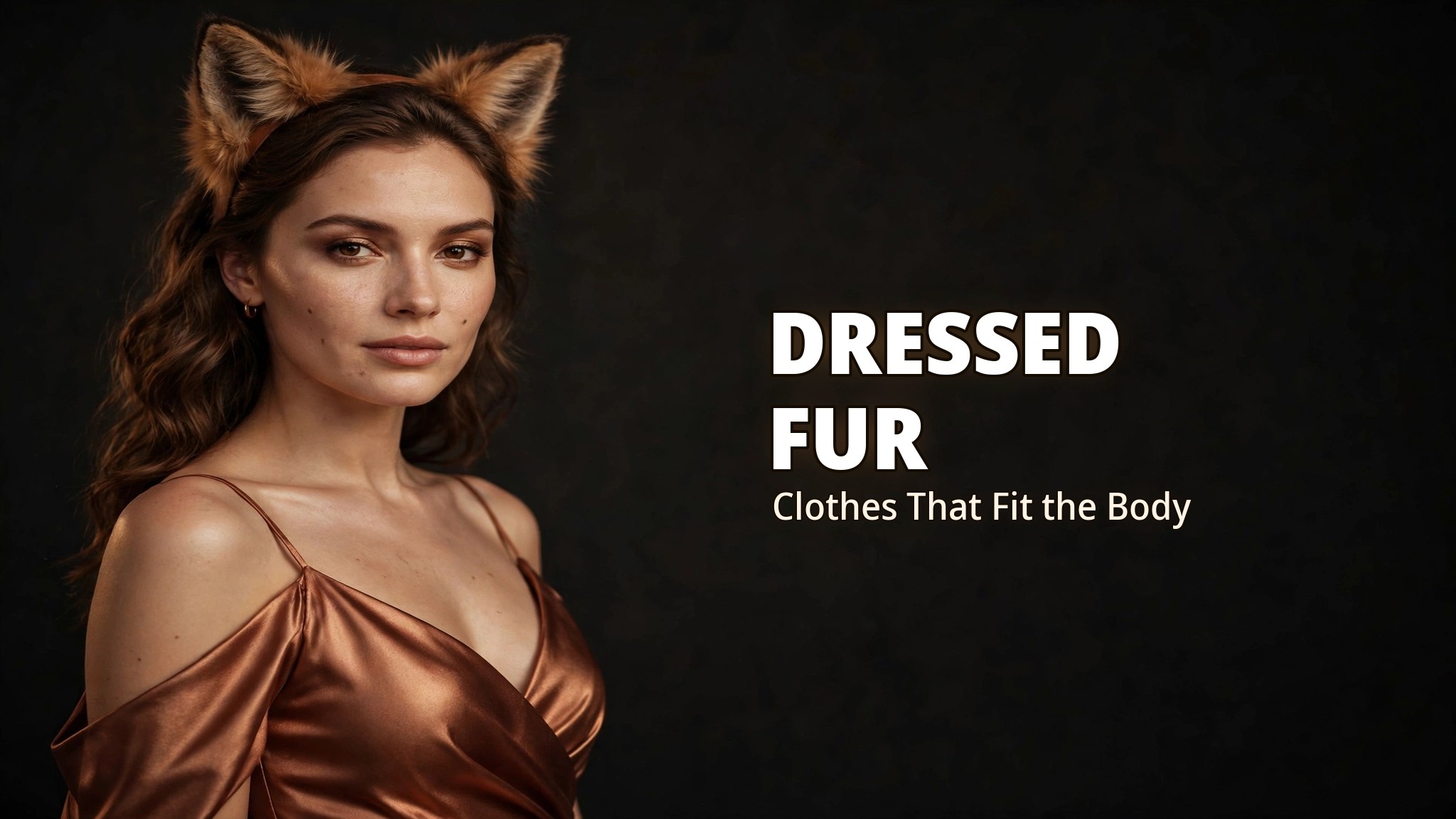
I dette guide
- 1. The tail is not an accessory
- 2. Ears change every hat
- 3. Paws, claws, and the shoe problem
- 4. Wings, horn, and the parts you forgot
- 5. Fabric that moves like fur moves
- 6. One outfit, three species
- 7. The fitting checklist before you generate
- Kostnad: a fitting costs less than a re-roll
- 8. Samtykke: den regel det bestemmer alt
- FAQ
Clothes off the rack vs clothes fitted to the body
| Off the rack | Fitted to the body | |
|---|---|---|
| Tail | Hidden under the jacket, or bent flat | A tail opening where the tail leaves the body |
| Ører | Hat sits on top, ears flattened | Hat shaped around the ears |
| Paws | Human shoes, toes hidden | Shoes shaped for paws and claws |
| Silhouette | Human shape with animal ears | The animal’s own shape, dressed |
| Re-rolls | Every image fights the outfit | The outfit survives the set |
The table is the whole argument in one place. Off-the-rack clothes treat the animal parts as problems to hide; fitted clothes treat them as the design. And the outfit has to fit the animal — the tail, den ører, and the paws are the outfit, not the exceptions to it.
1. The tail is not an accessory
Start with the tail, because the tail breaks more outfits than anything else. A tail leaves the body at a specific place — low on the back, at the base of the spine — and it moves. A jacket with no opening does one of two things: it hides the tail completely, which makes the character look human with ears, or it forces the tail flat against the body, which looks wrong in every pose. The fix is a tail opening, and the opening has to be where the tail is, not where the jacket’s back seam falls.
Think of the opening as a buttonhole, not a hole: reinforced, exactly where it is needed, closing around what passes through it. A tail opening should work the same way — a reinforced slit, a flap, a gathered panel — letting the tail move without letting the jacket gape. Describe it that way in the prompt: “a reinforced tail opening at the base of the spine, the tail passing through freely.” The outfit has to fit the animal, and the tail is the first fitting.
Test the tail in three poses before you commit: standing, sitting, and turning away. Standing shows whether the opening sits at the right height; sitting shows whether the jacket rides up; turning away shows whether the tail reads as part of the character. If it looks right in all three, the outfit is fitted.
2. Ears change every hat
Ears change every hat, and most hat failures come from treating the ears as an afterthought. A beanie pulled down over fox ears flattens them and makes the character look like a human in a costume. A wide-brimmed hat with no room for the ears sits tilted and ridiculous. The ears are the tallest part of the character’s silhouette, and the hat has to be designed around them, not in spite of them.
There are three honest solutions. First, a hat shaped around the ears: a cap with two ear openings, a hood with ear room, a headband between the ears. Second, a wide-brimmed hat worn high, with the ears rising through a slot. Third, no hat at all: a hair ornament, a ribbon between the ears, a single earring. The outfit has to fit the animal, and the ears decide the hat.
Check the ears in profile, not just from the front. From the front, a hat can look fine while the ears are crushed flat behind it. From the side, the truth shows: either the ears have room and the hat sits naturally, or the hat is a lid on a box. Generate one profile shot of every hat before you build a set around it.
3. Paws, claws, and the shoe problem
Shoes are the hardest part of a furry outfit, because paws are not feet. A paw is wider, shorter, and it ends in claws; a human shoe is narrow, long, and closed at the toe. Put a paw in a human shoe and you get one of two failures: the shoe swallows the paw and the character looks like they are wearing boots two sizes too big, or the claws poke through and the shoe looks torn.
The honest options are boots shaped for paws, with a wide toe and a reinforced front; open shoes — sandals, straps, or bare paws with jewelry; or no shoes at all, which is legitimate for a character whose paws are part of the design. A human sneaker on a paw never works, however carefully you describe it. The outfit has to fit the animal, and the paws are the proof.
Claws deserve one line in the prompt, not a paragraph. “Claws visible at the toe, short and neat” is enough. Long claws in every image become a distraction; no claws at all makes the paws look like mittens. And remember that paws leave different tracks — if the scene includes footprints, dust, or a floor, the paws should match the floor they walk on.
4. Wings, horn, and the parts you forgot
Haler, ører, and paws are the obvious three, but many characters have a fourth part that breaks outfits: vinger, horn, gevir, a mane, a crest, a second set of ears. The rule is the same for all of them: name the part before you describe the outfit, and describe the outfit as something built around it.
Wings need a back panel that opens or splits — a jacket with a back vent, a cape that drapes between the wings, a harness instead of a shirt. Horns need a headpiece that sits between them, not over them; a crown, a circlet, a headband that frames the horns instead of fighting them. A mane needs a collar below it, not a scarf that buries it. The pattern is always the same: the body part comes first, the clothing second.
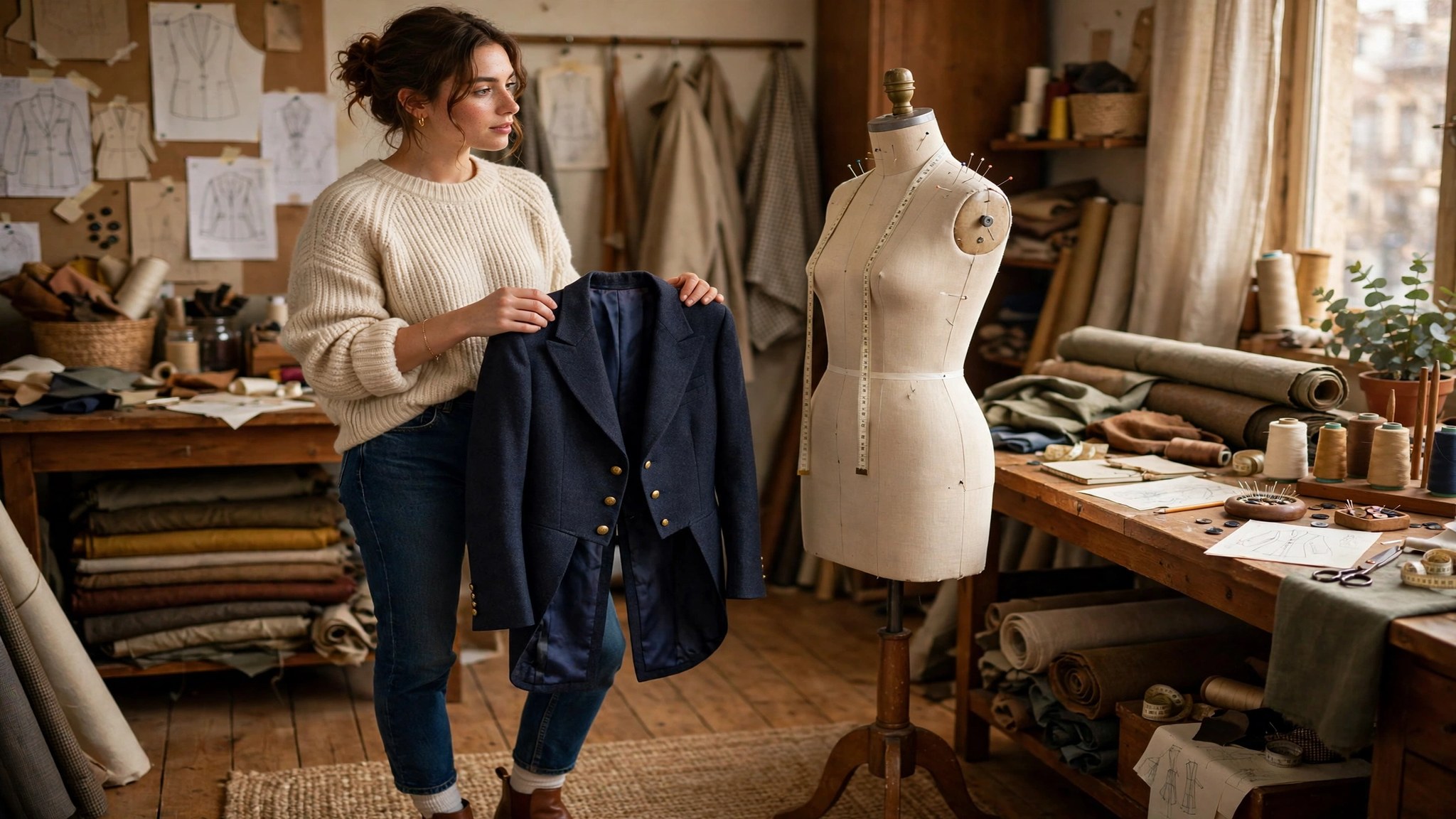
Make a list of your character’s parts before you write a clothing prompt: hale (yes/no, where it leaves the body), ører (shape, height), poter (claws or not), plus anything extra. Then write the outfit as answers to that list. A prompt that names the parts gets a fitted outfit; a prompt that only names the clothes gets a human in a costume.
5. Fabric that moves like fur moves
Fabric matters more on a furry character than on a human one, because fur moves and stiff fabric does not. A starched collar looks like armor; a leather jacket that cannot bend at the shoulder looks like a shell. The fabrics that work move the way fur moves: soft knits, draped wool, linen, velvet, anything with weight and give.
There is also a texture problem: fur is busy, and a busy fabric fights it. A patterned jacket on a patterned coat — a plaid shirt on a tabby, a floral dress on a spotted wolf — turns the image into noise. The rule is one texture at a time: if the fur is patterned, the clothes are plain; if the fur is plain, the clothes can carry the pattern. The outfit has to fit the animal, and the fabric is part of the fitting.
Pick the outfit color against the fur color, not the background: dark fur swallows dark clothes, while the same jacket on a cream fox reads clearly.
6. One outfit, three species
The fastest way to learn fitting is to dress the same outfit on three different species and watch what changes. Take a simple outfit — a shirt, a jacket, trousers — and put it on a fox, a wolf, and a cat. The fox needs the tail opening low and the ears high. The wolf needs a wider jacket, because the shoulders are broader and the tail is heavier. The cat needs the smallest adjustments of all, but the tail is the longest and the most likely to tangle in a long coat.
What you learn is that there is no universal furry outfit — only a fitting process: name the parts, place the openings, pick the fabric, check the profile. A prompt that says “a tailored jacket with a tail opening, ear room in the hood, and paw-shaped boots” will fit almost any species, because it describes the fitting, not the fashion. The outfit has to fit the animal, and the fitting is the same sentence for every species.
Keep one fitted outfit per character and reuse it. A character in the same outfit across ten images is a character; in ten different outfits, a fashion shoot. The outfit is part of the identity, and the identity is what the viewer remembers.
7. The fitting checklist before you generate
Run this checklist before you spend a credit on the outfit. First, list the parts: hale, ører, poter, plus anything extra. Second, place the openings: where does the tail leave the body, where do the ears sit, how wide are the paws. Third, pick one fabric and one color, against the fur. Fourth, check the profile: one side shot of the hat and the tail before you build the set. Fifth, check the sitting pose: jackets ride up, tails get trapped, hats tilt.
If the checklist passes, generate the outfit once at 6 credits and look at it full-size before the set. A fitting test costs 6 credits; a full set in a broken outfit costs ten images plus re-rolls. The checklist is free, the test is cheap, and the outfit has to fit the animal — the fitting is the whole job.
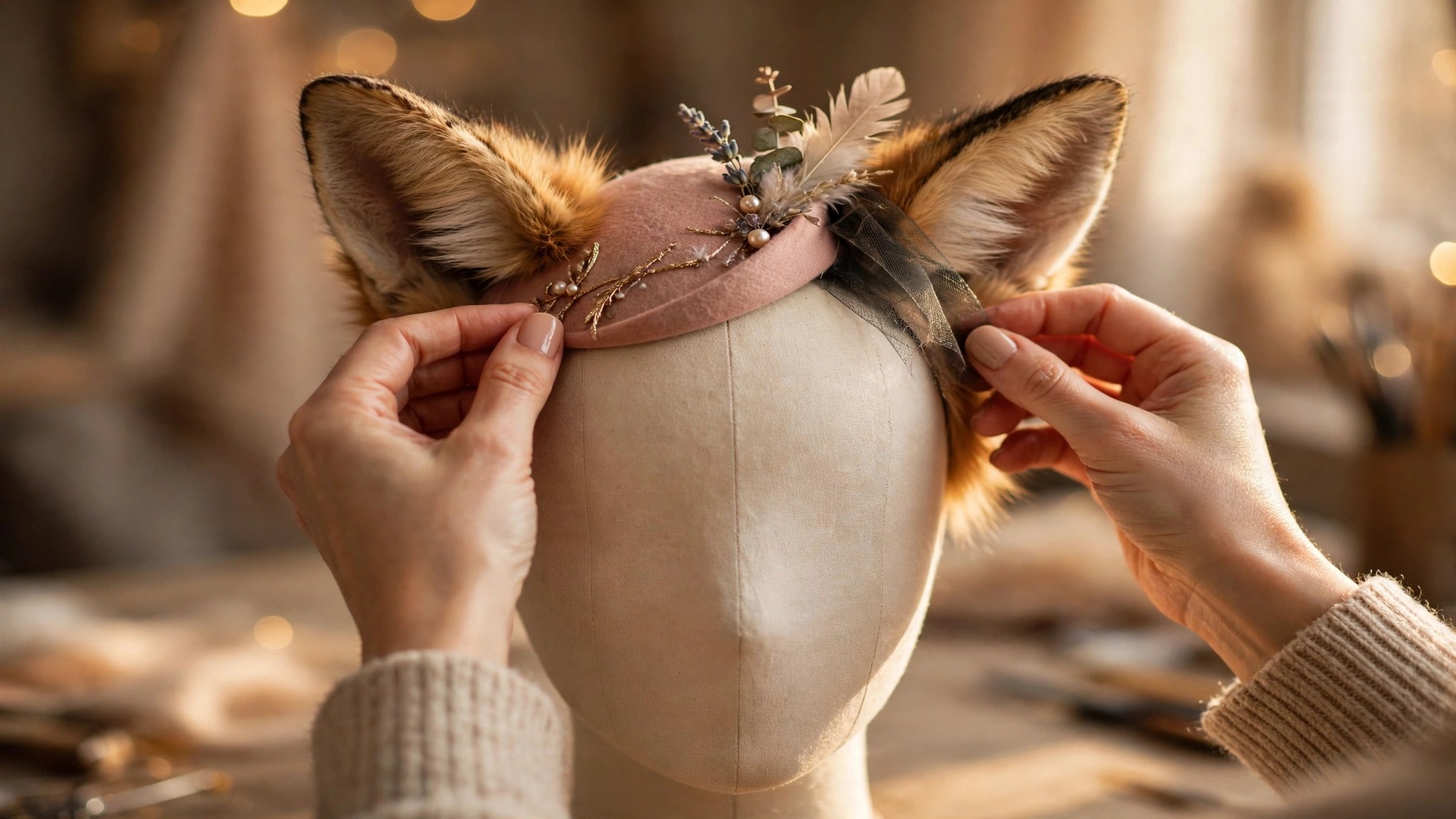
Save the fitting prompt that works. A sentence like “a tailored jacket with a reinforced tail opening at the base of the spine, a hood shaped around tall fox ears, and wide paw boots” is an asset — paste it into every outfit prompt for that character, and the fitting stays consistent from the first image to the fiftieth.
Kostnad: a fitting costs less than a re-roll
Et bilde er 6 kreditter — omtrent $0.12 på den $19.99 pakke og $0.07 på den $59.99 pakke. A fitting test of three images is 18 kreditter — omtrent $0.36 Og $0.22. Et bilde-til-bilde redigere er 49 kreditter — omtrent $0.98 Og $0.59. A ten-image set in a broken outfit, re-rolled twice, is 120 kreditter — omtrent $2.40 Og $1.44. Priser sjekket 13 nov. 2026; generatoren viser den nøyaktige kostnaden før du kjører den.
Den fri grunnlinje fortsatt står: fri, Ingen registrering. Start gratis, and the starting is the fitting.
8. Samtykke: den regel det bestemmer alt
Generer bare bilder og videoer av deg selv, eller av fiktiv voksne. Generer aldri et bilde eller en video av en ekte person uten deres samtykke — ikke en kjendis, ikke en bekjent, ikke en fremmed. Ikke--samtykke- generering er ikke tillatt, og et generert bilde er vanskeligere å ta tilbake enn et foto når det først er delt. Verktøyet er bygget for dine egne bilder og fiktive voksne, og det grense er absolutt.
This matters twice over for furry characters: a furry character is a fictional adult, and the person behind the character — you — is the one who consents to your own image. Build the character from your own photos and your own imagination, and keep real people out of it.
FAQ
What is the single most common furry outfit mistake?
A jacket with no tail opening. The tail either disappears, which makes the character look human with ears, or it bends flat, which looks wrong in every pose. Place the opening where the tail leaves the body.
Can a furry character wear a hat at all?
Ja, if the hat is designed around the ears: ear openings, a hood with ear room, or a headband that sits between the ears. A hat pulled down over the ears flattens them and breaks the character.
What shoes fit paws?
Boots shaped for paws with a wide toe and a reinforced front, open sandals or straps, or no shoes at all. Human sneakers on paws fail every time — the shoe swallows the paw or the claws poke through.
How do I keep one outfit consistent across a set?
Save the fitting sentence — tail opening, ear room, paw boots — and paste it into every outfit prompt for that character. One outfit, reused, is an identity; ten outfits is a fashion shoot.
Does fur pattern limit the clothes?
Ja: one texture at a time. Patterned fur gets plain clothes; plain fur can carry a pattern. A patterned jacket on a patterned coat turns the image into noise.
Kan jeg lage AI-porno av en virkelig person?
Nei. Bare generere bilder av deg selv, eller av fiktiv voksne. Det er ikke tillatt å generere et bilde av en ekte person uten samtykke.
Endelig dom
Design around the tail, den ører, and the paws, and the rest is taste. The outfit has to fit the animal, and a fitted outfit is the difference between a character and a costume.